Conspiracy Theories, Rabbit Holes and Carl Jung

The modern urban phenomenon of “conspiracy theories” typically applies to the sordid web of secret connections and associations that is believed to exist below the threshold of general awareness. The term “conspiracy theory” was, in fact, believed to have been popularized (if not coined) by the CIA during the 1960’s in order to discredit alternative ideas pertaining to the Kennedy assassinations.
In recent years, though, the term has evolved to refer to all manner of claims and ideas, often bizarre and far-fetched, applying to such themes as extraterrestrials and UFOs, clandestine cabals of occultist oligarchs, intelligence networks and organized crime, etc. Some of these ideas are well thought-out and seemingly plausible, while others are so far off-the-wall and lacking in any substantial evidence that they stretch the credulity of even the most gullible among us.
The truth is that there are over 8 billion human individuals alive on the planet, currently, while the human species has a recorded history stretching back at least 5,000 years and an archaeological record of about 3.3 million years. An in-depth study of history reveals that human behavior can be pretty bizarre and extreme at times. Who’s to say, therefore, that human behavior in current times cannot be similarly characterized, at least in secret, underground circles?


Perhaps what we refer to as “conspiracy theories” and “rabbit holes” applies to sensationalized accounts of hidden history — to exaggerated “urban legends” associated with censored, lost, or hidden historical records from the remote and recent past? Added into the mix, perhaps, may be accounts of psychic phenomena, mysticism, esoterica, etc.
The question remains, however, as to how much in the domain of “conspiracy theories” and “rabbit holes” is verifiable and accurate, and how much can be dismissed as imaginary and nonsensical?
Jungian Ideas in Context
I believe that the ideas postulated by renowned Swiss psychologist, Carl G. Jung, may cast some light into the dark, sordid, often neurotic world of “conspiracy theories.” Jung’s ideas pertaining to the shadow, projection and the collective unconscious seem to provide interesting insights into this domain.
Jung’s idea of the “shadow” refers to suppressed beliefs, urges, memories, etc. in the individual’s psyche that may be personally objectionable or a source of guilt or shame to the individual. These thoughts are typically “swept under the rug,” as it were — concealed beneath conscious awareness within the depths of the subconscious. From this hidden level below conscious awareness, the “shadow” tends to distort or color an individual’s perceptions of the world around them, leading to the act of “projection” — the attribution of certain qualities to others that one may secretly be ashamed or guilty of oneself.
These ideas are similar, in some respects, to the Biblical teachings of Jesus Christ. Addressing the sanctimonious, authoritarian religious bigots of his era, Christ is quoted to have uttered the words:
“Why do you look at the speck of sawdust in your brother’s eye and pay no attention to the plank in your own eye? How can you say to your brother, ‘Let me take the speck out of your eye,’ when all the time there is a plank in your own eye? You hypocrite, first take the plank out of your own eye, and then you will see clearly to remove the speck from your brother’s eye.”
Matthew 7:3-5, NIV


In the Biblical context, Christ was specifically addressing religious hypocrisy, bigotry, and sanctimony. In the Jungian context, however, similar themes apply to a broader context associated with the subconscious “projection” of the “shadow,” which often manifests as the conscious actions of blame, judgmentalism, etc.
Jung’s other idea cited in this discussion is the theory of the “collective unconscious,” which refers to a level of the human subconscious where, Jung postulates, common tribal memories, mythic archetypes, etc. reside. It is a shared level of the subconscious mind that is non-specific to any particular individual and is accessible to and shared by the broader human collective.
Jungian Analysis of Conspiracy Theories
I believe that Jung’s ideas can give us an understanding of 20th and 21st century “conspiracy theories” at two levels.
On the one hand, modern conspiracy theories and rabbit holes are riddled with all manner of obfuscations and distortions. These, I submit, are, at least in part, created by individuals engaging in projection, from out of the shadow within their own individual psyches. That is to say that the “shadow” within the individual psyche distorts one’s understanding of the core ideas and concepts that might constitute any given conspiracy theory. The “projection” that each of us engages in, thereby, serves to propagate distorted ideas in the realm of conspiracy theories, which often take the form of elaborate, paranoid fantasies that tend to scapegoat minorities, population groups and individuals while promoting mass hysteria, xenophobia and paranoia. All the while, the very real issues underlying the elaborate networks of paranoid exaggeration and obfuscation whereby conspiracy theories typically manifest, tend to remain hidden and forgotten, while the sensationalistic exaggerated claims steal the limelight from the possibly authentic underlying issues.


The solution to this problem of obfuscation and distortion, perhaps, is for thoughtful researchers to weigh the evidence associated with the claims made by such conspiracy theories. Arriving at well-reasoned arguments and conclusions, they should publish their results so as to try to dispel the more outrageous and unfounded claims while spotlighting the substantiated, authentic ideas. I think it is a mistake to judge ideas solely on the basis of “plausibility” or “realism,” though, because if a reasonable case can be made for even the most seemingly outrageous idea, I believe that such an idea might deserve serious consideration.
Beneath the superficial layer of paranoid obfuscation often caused by individualized Jungian “shadow projection” (distinct from deliberate, conscious attempts at disinformation and concealment, possibly undertaken by authorities — not Jungian), there exists a deeper level of reality. This may be understood to be the actual level of suppressed, concealed information that we may describe as being, in effect, the “shadow” of the human “collective unconscious” or, perhaps, as the “cultural shadow” or “collective shadow.” These might be memories or ideas that an entire community or group of people collectively decides to keep buried beneath the level of conscious public discourse and acknowledgement. Possibly through some form of subconscious tacit agreement, they may pretend that these suppressed ideas don’t even exist or aren’t real.
In this context, the act of digging into “conspiracy theories” and exposing suppressed, hidden information may be seen to be akin to the Jungian process of “shadow work.” In other words, it is about coming to terms with the hidden aspects of our shared psyche, our culture and society. The process is aimed at reconciling the shadow aspects of our collective psyches with our societal and cultural norms, public discourse and conscious awareness so as to avoid the errors associated with collective projection. These may manifest as the communal demonization of minorities, population groups, and even entire nations, as seen in the context of religious wars, ethnic strife, the scapegoating of individuals and groups, etc.
On the subject of “shadow work,” it must be noted that while the process involves bringing the suppressed aspects of our individual and collective selves into the realm of conscious awareness so as to reconcile ourselves with them, there are several misconceptions with the process that are worth addressing. As we “integrate” the subconscious parts of our psyches with our conscious selves, we recognize, nevertheless, that we are dealing with generalized human “vices,” not necessarily sources of particular shame or guilt in oneself. Reconciling our conscious awareness with the suppressed sources of guilt and shame within our psyches does not imply that we now have a free reign to indulge ourselves in these vices. It is not about relinquishing our moral compass and giving in to licentiousness. Rather, it means acknowledging, integrating and reconciling ourselves with our hidden sources of guilt and shame so that we can become authentic, integrated personalities with a deep, holistic, non-judgmental understanding of our psyches.
Clearing Perceptual Distortions
The issue here is perception, ultimately. Jung’s ideas bring attention to the reality that human perception is distorted at many levels — at personal as well as collective levels. Our own distorted perceptions often fabricate elaborate constructs of fantasy and imagination that obscure reality from our understanding. Very often, these imaginative constructs manifest as “conspiracy theories,” which may sometimes border on being downright paranoid and schizoid in nature. Nevertheless, very often, beneath this superficial layer of obfuscation and distortion, there may be a suppressed level of reality and truth that is deserving of exposure and serious consideration — but in an honest, authentic mode, devoid of sensationalism, exaggeration and distortion.


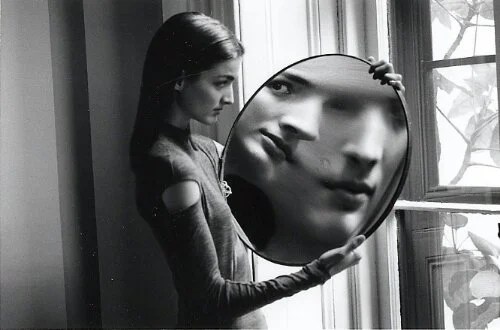

Only by reconciling ourselves with our “shadow” — at both the individualized and collective levels — can we hope to come to terms with ourselves and move in a positive, constructive, holistic, integrated direction.


One thought